
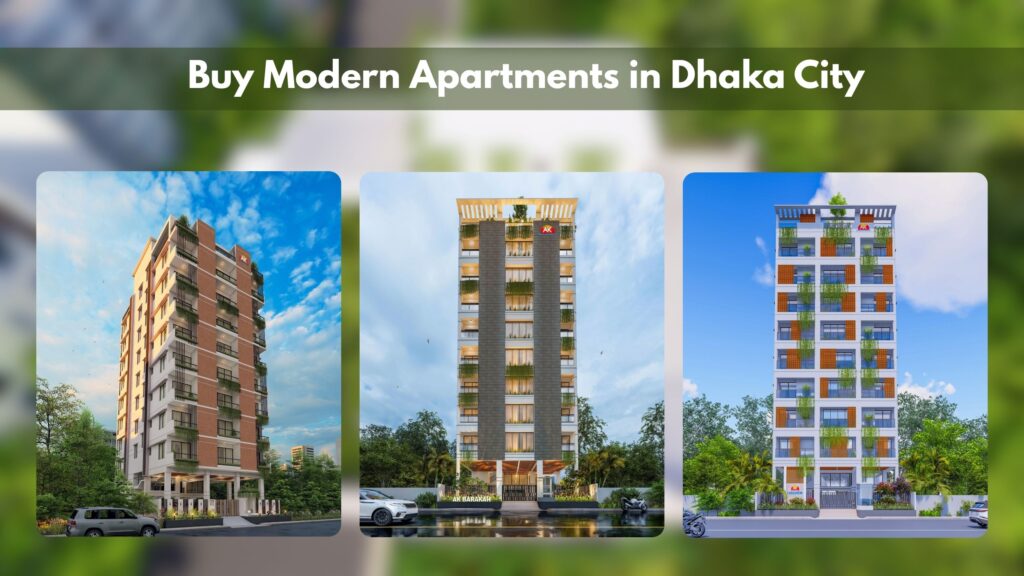
If you’ve been searching for luxury apartments in Dhaka, you’ve probably noticed how crowded the conversation has become — every developer calls their project “premium,” every brochure promises “world-class living.” This guide skips the marketing language and looks at the actual facts buyers need: location quality, construction standards, pricing structure, legal documentation, and how to evaluate a project before signing anything.
We’ll use three real, currently-running projects in Jolshiri Abashon — AK Red Rose, AK Barakah, and AK Lakeview — as concrete examples throughout, since they illustrate common patterns (and a few uncommon ones) in Dhaka’s mid-to-upper apartment market.
Table of Contents
- Why Jolshiri Abashon Keeps Coming Up
- What “Luxury Apartment” Actually Means in Dhaka
- Case Study: Three Projects Compared
- Floor Plan & Specification Comparison Table
- Location Map
- How Pricing & Payment Plans Typically Work
- What to Check Before You Sign
- Questions Buyers Are Actually Asking
- Final Thoughts
Why Jolshiri Abashon Keeps Coming Up
If you’ve spent any time researching apartments in Dhaka recently, Jolshiri Abashon has likely come up — and there’s a specific reason for that, not just hype.
Jolshiri Abashon is a planned residential township developed by the Bangladesh Army, located off the 300-feet Purbachal Highway and the 100-feet Madani Avenue. A few things distinguish it from older, organically-grown residential areas in Dhaka:
- Roughly half the land is reserved as open space. Lakes, parks, and walkways aren’t an afterthought squeezed between buildings — they were part of the original masterplan.
- Utilities are underground. Electric lines, water supply, and sewerage are planned infrastructure rather than retrofitted around existing buildings, which is the more common situation in older parts of the city.
- It’s still developing. This cuts both ways — it means you’re buying into a township that isn’t finished yet (some amenities are still being built out), but it also means land and apartment prices haven’t plateaued the way they have in long-established areas like Gulshan or Dhanmondi.
None of this means Jolshiri is automatically the “best” choice for every buyer — if you need to be near a specific workplace, school, or hospital today, an established neighborhood might serve you better in the short term. But for buyers weighing long-term value and willing to be early into a developing area, it’s worth understanding why the location keeps appearing in apartment searches.
What “Luxury Apartment” Actually Means in Dhaka
The word “luxury” gets attached to almost every new apartment listing in Dhaka, which makes it close to meaningless unless you define it by specifics. When evaluating any project — not just the ones discussed here — these are the concrete things worth checking rather than taking the label at face value:
| What to Check | Why It Matters |
|---|---|
| Units per floor | A building with 1 apartment per floor offers genuinely different privacy than one with 6–8 units sharing a landing. This is a real, measurable difference — not a marketing claim. |
| Orientation (facing direction) | South-facing units in Dhaka’s climate generally get better natural light and airflow through the hotter months. North-facing units can feel noticeably darker. |
| Floor-to-floor height & room dimensions | Listed square footage can be misleading if ceiling height or room proportions are cramped. Ask for the actual floor plan, not just the total sft figure. |
| Construction code compliance | Ask specifically whether the building follows the Bangladesh National Building Code (BNBC) — this is a verifiable standard, not a vague promise. |
| Parking ratio | Compare the number of parking spaces to the number of units. A building with fewer parking spots than apartments will have a parking problem within a year of full occupancy. |
With that framework in mind, here’s how three currently-selling Jolshiri Abashon projects compare.
Case Study: Three Projects in Jolshiri Abashon
AK Red Rose — Sector-16 (Sold Out)
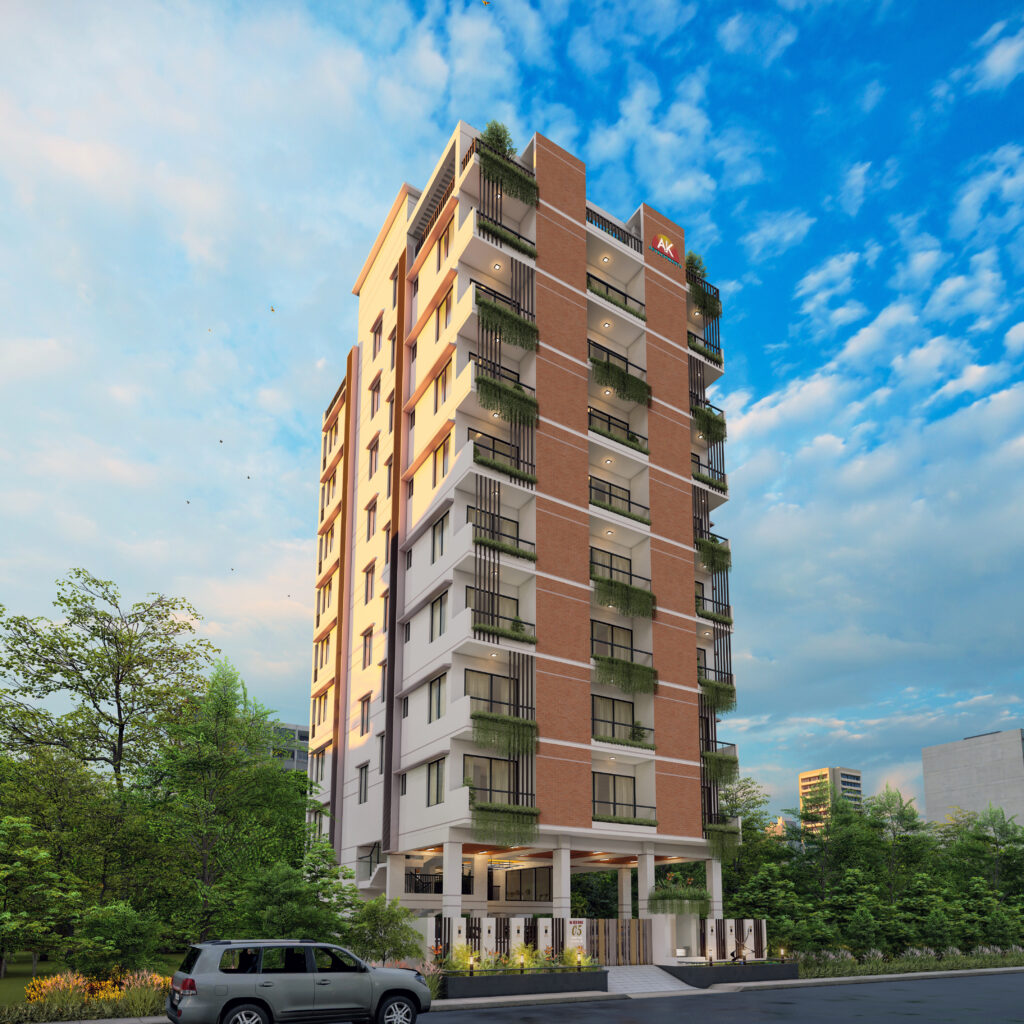
AK Red Rose was the first of these three projects to go to market, located at Plot-005, Road-403, Sector-16. It followed a single-unit-per-floor layout — 2850 sft per apartment, 4 bedrooms, 5 bathrooms, 5 verandas, south-facing. All 8 units in the building have now been sold, which is worth mentioning honestly rather than glossing over: it tells you something about demand at this configuration and price point in this specific sector, even though it means new buyers can’t purchase directly anymore (a resale waitlist exists for those interested).
AK Barakah — Sector-09 (Available)
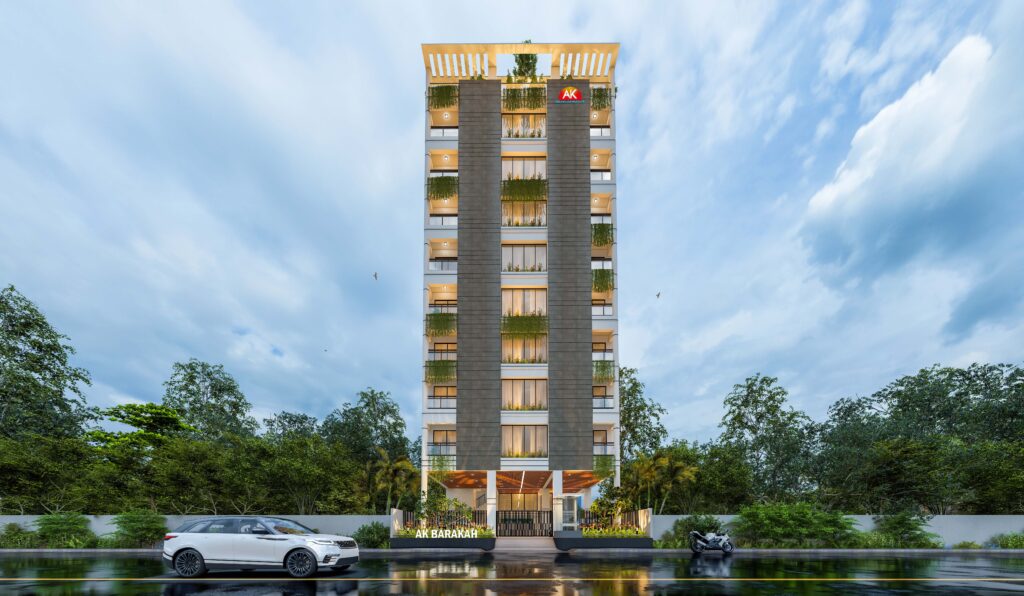
AK Barakah sits at Plot-031, Road-303, Sector-09 — a different part of the township than Red Rose. It follows the same general apartment formula: roughly 2850 sft, south-facing, one unit per floor, 4 bedrooms and 5 bathrooms. The building is G+8 with construction currently underway. As of this writing, units are open for booking with a milestone-linked payment structure.
AK Lakeview — Sector-14 (Available)
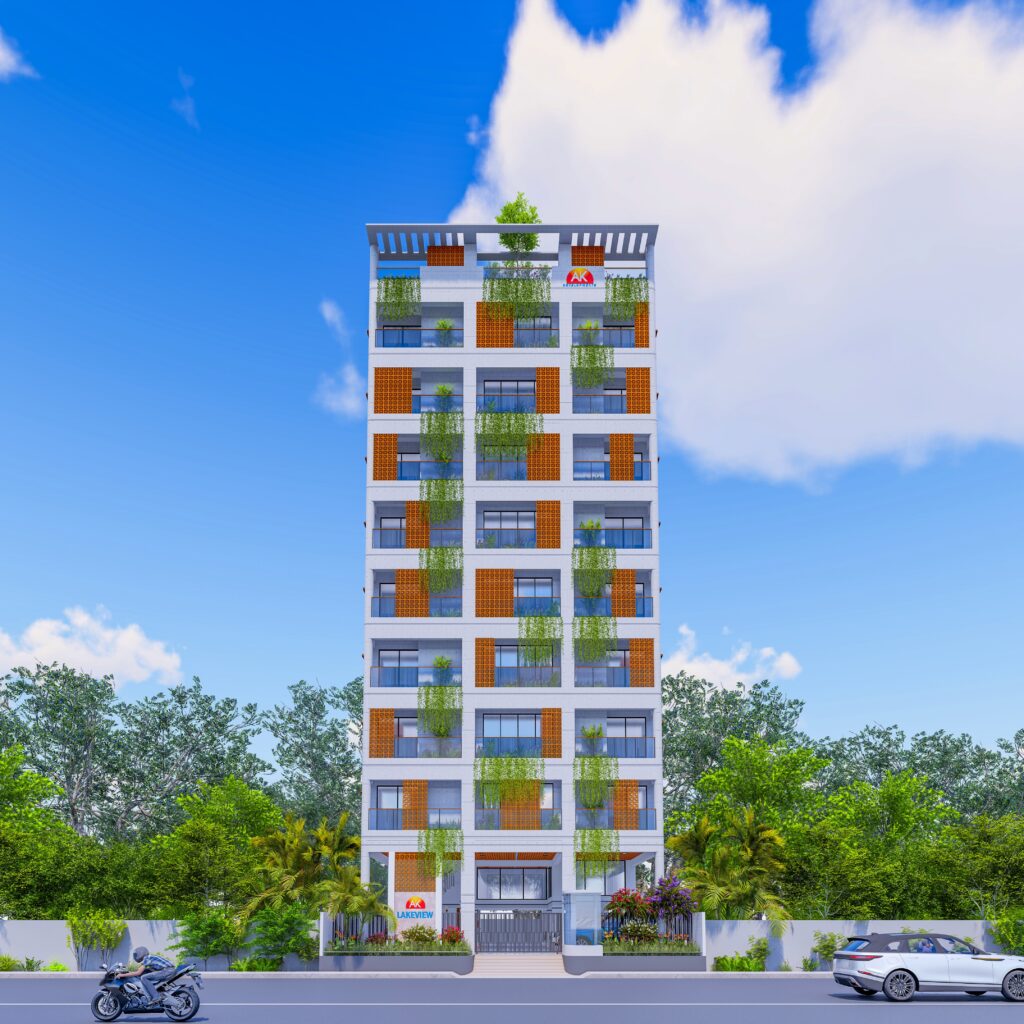
AK Lakeview, at Plot-004, Road-404, Sector-14, is positioned near one of Jolshiri’s lake sections — which is the main practical difference from the other two projects beyond the sector location itself. It’s a G+M+8 building (ground plus mezzanine plus 8 floors), with similar unit specs: 2850 sft, 4 bedrooms, south-facing. It also includes EV charging infrastructure and 10 parking spaces, which is a relevant detail if you currently own or plan to own an electric vehicle — not every Dhaka residential building has planned for this yet.
Floor Plan & Specification Comparison
| Feature | AK Red Rose | AK Barakah | AK Lakeview |
|---|---|---|---|
| Sector | Sector-16 | Sector-09 | Sector-14 |
| Plot / Road | Plot-005, Road-403 | Plot-031, Road-303 | Plot-004, Road-404 |
| Status | Sold Out (waitlist) | Available | Available |
| Building Height | G+M+8 | G+8 | G+M+8 |
| Apartment Size | ~2850 sft | ~2850 sft | ~2850 sft |
| Bedrooms | 4 | 4 | 4 |
| Bathrooms | 5 | 5 | 5 |
| Verandas | 5 | 5 | 5 |
| Units per Floor | 1 | 1 | 1 |
| Total Units | 8 | 8 | 8 |
| Orientation | South-facing | South-facing | South-facing |
| Parking | Included | 10 spaces | 10 spaces |
| EV Charging | — | — | Yes |
| Notable Feature | Sold out — proof of demand | Currently under construction | Near-lake location |
A few honest observations from this table: all three projects share nearly identical core specs (size, bedroom count, orientation), which suggests the developer has settled on a formula that works rather than varying wildly project to project. The real differentiators are sector location, construction stage, and small extras like EV charging at Lakeview.
Location Map
Jolshiri Abashon connects directly to the 100-feet Madani Avenue and the 300-feet Purbachal Highway, giving reasonably direct access toward both central Dhaka and the Purbachal area depending on which route you take.
How Pricing & Payment Plans Typically Work
This section applies broadly to Jolshiri Abashon apartment purchases, not just these three projects, since the general structure is fairly standard across developers in the area:
Down payment: Most projects, including the ones discussed here, structure down payments starting around 30% of the total price. This isn’t unique to any one developer — it’s close to a market norm for apartments still under construction (sometimes called “pre-handover” or “off-plan” pricing).
Installments: The remaining balance is typically spread across milestone-linked installments — meaning payments are due as construction reaches specific stages (foundation complete, structure complete, finishing stage, etc.) rather than purely time-based. Ask explicitly how many installments are offered and what triggers each one; this varies project to project even within the same general area.
Pre-handover pricing logic: Buying before a building is finished is usually priced lower than buying a completed, ready-to-move-in unit — this is standard real estate logic, not specific to Bangladesh. The tradeoff is risk: you’re committing capital to a building that doesn’t exist yet, which is why the next section on legal checks matters more here than for a finished property.
What to Check Before You Sign Anything
Whether you’re considering one of these three projects or any other apartment in Dhaka, these checks apply universally and shouldn’t be skipped regardless of how reputable a developer seems:
- Land title and ownership chain. Ask for the full deed history, not just the most recent document. Have an independent lawyer review it — not one recommended by the developer.
- Building plan approval. Confirm the building has an approved plan from the relevant authority for that location, and that the plan matches what’s actually being constructed.
- Written sale agreement. Every commitment — price, payment schedule, handover date, specifications — should be in the written agreement, not a verbal assurance. If a salesperson tells you something that isn’t in the document, ask why it isn’t written down.
- Construction standard in writing. Ask whether the agreement specifies compliance with the Bangladesh National Building Code (BNBC), and what materials grade is specified (e.g., rod grade, cement type).
- Handover date with consequences for delay. Check whether the agreement includes any provision for what happens if the project is delayed beyond the agreed date.
- Site visit during construction. If the building is still under construction, visit the site yourself rather than relying only on rendered images. Construction-stage photos tell you more than marketing renders.
- Talk to existing buyers if possible. For a developer with completed projects elsewhere, ask to speak with an owner from a previous building. A developer confident in their track record should have no issue facilitating this.
This list isn’t specific to Jolshiri Abashon or to any single developer — apply it everywhere you’re considering an apartment purchase in Dhaka.
Questions Buyers Are Actually Asking
Is Jolshiri Abashon a good investment compared to Bashundhara or Uttara?
It depends what you’re optimizing for. Bashundhara and Uttara are more established, with existing infrastructure, schools, and commercial activity already built out — you’re paying for that maturity. Jolshiri is earlier in its development cycle, which generally means lower current prices but also more uncertainty about how quickly remaining infrastructure (schools, hospitals, commercial centers) will be completed. Neither answer is universally “better” — it depends on your time horizon and risk tolerance.
Why is AK Red Rose sold out — should that worry me about buying AK Barakah or AK Lakeview?
Not inherently. A sold-out project at this size (8 units) simply means demand matched supply at that specific sector and price point — it’s a small enough building that selling out isn’t a huge sales volume. It’s reasonable context, not a guarantee about the other two projects, which are different buildings in different sectors.
What does “south-facing” actually change in daily living?
In Dhaka’s climate, south-facing rooms typically get more consistent natural light through the day and tend to catch more of the prevailing breeze during the warmer months. North-facing units aren’t unlivable, but they’re noticeably dimmer on average — worth experiencing in person at a similar building if you can, rather than taking the claim on faith.
Is one apartment per floor actually worth paying for versus a building with multiple units per floor?
This is genuinely a personal preference question with a real tradeoff. One-unit-per-floor buildings offer more privacy and quieter common areas, but they also mean fewer total units to spread maintenance costs across, which can affect monthly service charges. If privacy is a priority for you, it’s worth it; if minimizing monthly costs matters more, a building with more units per floor may work out better financially.
Can I negotiate the price or payment schedule?
Often yes, particularly on payment schedule structure (number of installments, down payment percentage) rather than the headline price, especially earlier in a project’s construction timeline when fewer units have sold. It’s always worth asking directly rather than assuming the first quoted terms are final.
What happens if construction is delayed?
This should be explicitly addressed in your written sale agreement before you sign — ask specifically what compensation or remedy exists for delays beyond the agreed handover date. If a developer is unwilling to put any delay provision in writing, treat that as a meaningful signal.
Final Thoughts
Buying an apartment — in Jolshiri Abashon or anywhere in Dhaka — isn’t a decision to make purely from a brochure or a single site visit. AK Red Rose, AK Barakah, and AK Lakeview are useful as a case study precisely because they show both the consistency (similar specs, similar pricing logic) and the differences (sector, construction stage, small feature variations like EV charging) that exist even within a single developer’s portfolio in a single township.
If you’re seriously considering any of these three projects, or comparing them against other Jolshiri Abashon developments, the most useful next step isn’t reading another article — it’s a site visit, a request for the actual written sale agreement, and an independent legal review of the land documents. Everything else is secondary to those three things.